
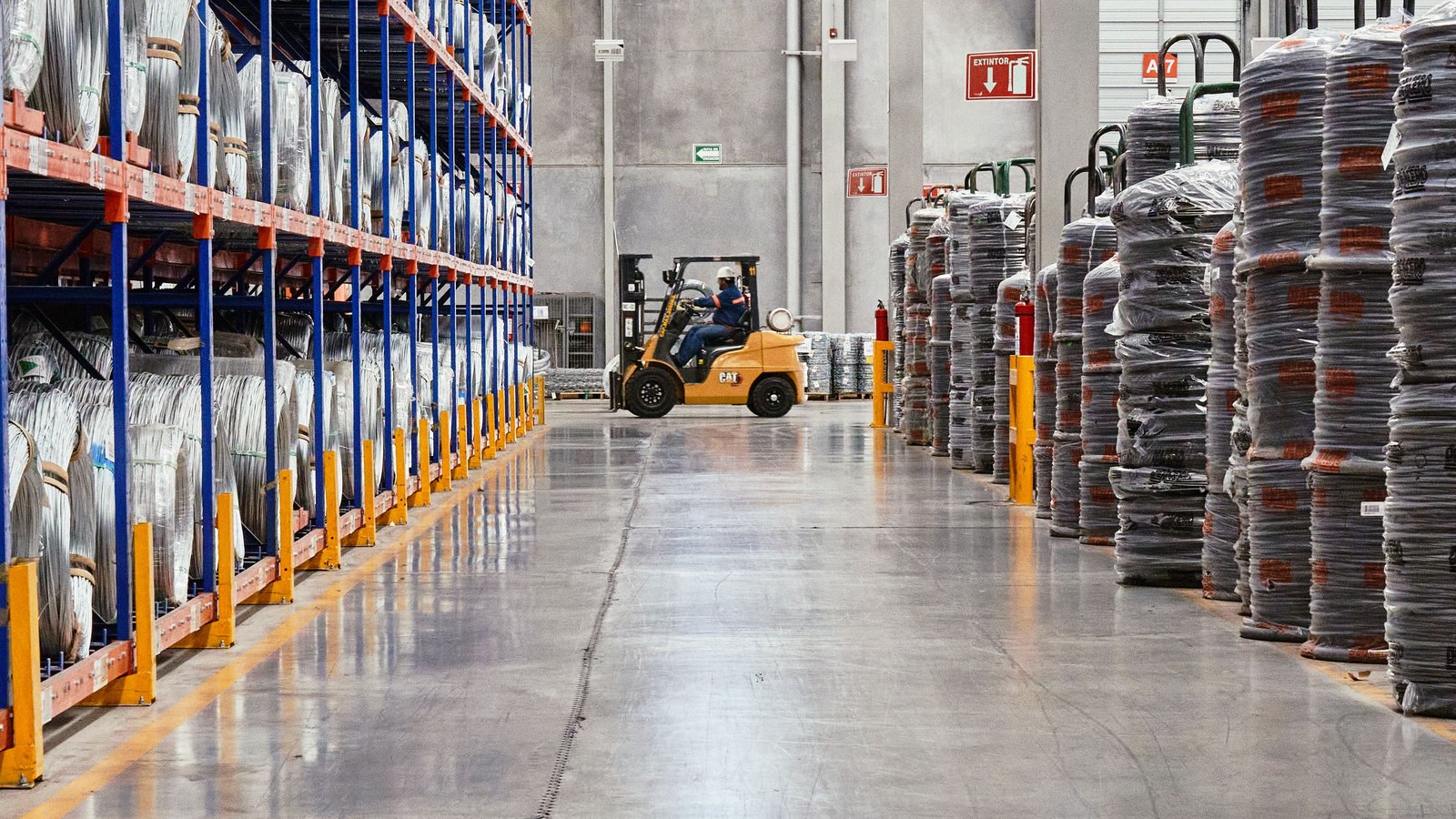
An empty warehouse is wonderfully persuasive. Everything looks spacious because none of your work is in it yet.
The viewing gets more useful when you bring an imaginary delivery, an ordinary order, and a bad day.
Where does the delivery wait? Where does the order travel? What happens when tomorrow’s receiving arrives before today’s parcels leave?
Walk The Work, Not Just The Floor
Trace receiving, inspection, storage, replenishment, picking, checking, packing, and dispatch. Add returns and unresolved stock. Every area needs a purpose and a route to the next one.
Stand where a delivery would arrive. Could it enter using the actual vehicle and handling method? Where would unchecked stock wait without becoming confused with sellable inventory?
At the proposed packing area, imagine the tables occupied and finished parcels accumulating. Can supplies be replenished without crossing every worker’s path? Can an unresolved order leave the flow without losing its identity?
Test a busy day, not only your present average. More storage is not enough if the dispatch area fills first.
Check Whether You Can Use The Building As Intended
Ask about permitted use, occupancy, operating hours, deliveries, alterations, utilities, and restrictions in the lease. Confirm applicable local requirements with the relevant authority and qualified advisers before committing. Location affects zoning, regulations, and business costs; the SBA identifies these as part of choosing a business location. SBA location guidance.
Do not assume an existing rack arrangement is suitable for your stock or equipment. Have the layout, load capacity, clearances, and installation requirements checked for the actual use. OSHA’s warehouse guidance highlights hazards from materials handling, vehicle movement, and unsafe storage. OSHA warehousing hazards and solutions.
A nearby post office is only one part of dispatch
A short drive is useful if that location can support your actual handoff. Verify pickup availability, acceptance arrangements, access, hours, and what happens at higher volume.
Consider inbound freight too. A site that is easy for parcel drop-offs but awkward for your supplier’s deliveries can move the problem to receiving.
Write down the carrier arrangement you expect to use and confirm it. A map cannot tell you whether the daily process will work. Build your USPS handoff covers what to ask for.
Check conditions your inventory and team need
Look beyond the thermostat. Ask how temperature and humidity behave in the storage areas, who maintains the systems, and what happens during an outage. Match storage conditions to the actual products and supplier instructions.
Check water ingress, signs of pests, lighting, power where workstations will be, internet availability, and mobile reception. If you broadcast from the building, assess the practical separation of the show area from fulfillment noise and traffic.
Consider staff access, parking, rest facilities, and the journey workers make between tasks. A location that saves rent but makes every shift harder may not be the economical choice it first appears to be.
Compare The Cost Of Operating There
Build a side-by-side estimate of rent, additional lease charges, utilities, fit-out, moving costs, maintenance responsibilities, security, and the carrying cost of any overlap between sites.
Add recurring operational consequences: extra travel to hand off parcels, receiving delays, or duplicated handling created by the layout. Keep estimates distinct from confirmed quotes.
Growth space should solve a plausible need. Paying now for a distant imagined scale can tie up cash, while a site with no workable expansion path can force another move sooner than expected.
Use this: warehouse viewing sheet
| Area | Evidence To Collect | Pass / Unresolved / Unsuitable |
|---|---|---|
| Permitted use and lease terms | Written terms and required local checks | |
| Receiving | Vehicle access, door/dock suitability, inspection space | |
| Storage | Product conditions, rack suitability, usable locations | |
| Order flow | Paths between pick, check, pack, and dispatch | |
| Exceptions | Separate space for returns, damage, and unresolved orders | |
| Carrier handoff | Confirmed arrangements and fallback | |
| Team and utilities | Access, facilities, lighting, power, connectivity | |
| Total occupancy cost | Quotes, assumptions, fit-out and moving costs | |
| Growth | Which plausible future constraint the site can absorb |
Before making the decision: walk the site with the person who will manage the floor. Give every unresolved item an owner and a due date. A beautiful empty building should not get a free pass on unanswered operational questions.
Read Next
- Warehouse Manager Guide — who runs the floor you are choosing.
- Active Inventory vs. Overstock — how the storage has to work.
- Build your USPS handoff — confirm dispatch before you sign.
Sources
Put tomorrow's shift on one page.
Get the huddle sheet, exception log, responsibility worksheet, and weekly scorecard.
- Daily warehouse huddle sheet
- Station-assignment sheet (blank roles)
- Exception log (blank)
- Owner–manager responsibilities worksheet
- Weekly warehouse scorecard (blank categories)
- A short example of how a manager might use the kit
Blank templates only. The kit sets no staffing ratios, targets or benchmarks — you fill in your own.
Email required. Preview what's included before downloading.